What is routing in networking?
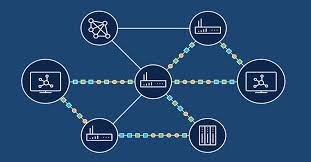
Routing is the fundamental networking process of selecting the best, most efficient path for data packets to travel across1 or more networks from a source to a destination.
Operating at Layer 3 (Network Layer) of the OSI Model, it enables, data, such as internet traffic, to navigate through routers and across different networks.
Key Aspects of Routing
- Purpose: Directs packets between different networks (e.g., LANs to WANs) to ensure data reaches its destination.
- Mechanism: Routers use routing tables—which list network destinations, metrics, and next-hop interfaces—to make forwarding decisions.
- Path Selection: Routers analyze packet headers and consult algorithms to determine the best path based on factors like congestion and speed.
Types of Routing
- Static Routing: Paths are manually configured by a network administrator, offering security and efficiency for small, unchanging networks.
- Dynamic Routing: Routers automatically learn and adjust paths in real-time using protocols like OSPF (Open Shortest Path First) or RIP (Routing Information Protocol) when network topology changes.
Default Routing: A specific type of static route used as a “gateway of last resort” for traffic when no specific route exists in the table.
Routing vs. Switching
- Routing: Operates at Layer 3 (IP Address) to connect different networks.
- Switching: Operates at Layer 2 (MAC Address) to connect devices within the same network.