How to cisco switch configuration step by step
Configuring a Cisco switch involves moving through specific management modes to establish basic identity, security, and connectivity.
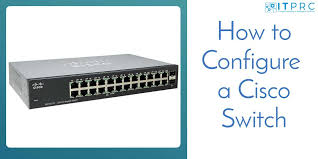
1. Establish Physical Connection
Connect your computer to the switch’s Console port using a rollover (console) cable.
- Software: Open a terminal emulator like PuTTY.
- Settings: Set the connection type to Serial with a Baud rate of 9600, 8 data bits, no parity, and 1 stop bit.
2. Access Management Modes
Once connected, you will see the Switch> prompt. Use these commands to enter configuration modes:
- Privileged EXEC Mode: Type
enableto gain full viewing rights (Switch#). - Global Configuration Mode: Type
configure terminalto make system-wide changes (Switch(config)#). - Commands:
- Switch> enable
- Switch# configure terminal
- Switch(config)#
- Switch(config)# hostname Access-Switch1
- Access-Switch1(config)# enable secret YourStrongPassword !Secures privileged mode
- Access-Switch1(config)# line console 0
- Access-Switch1(config-line)# password ConsolePassword
- Access-Switch1(config-line)# login
- Access-Switch1(config-line)# logging synchronous !Prevents console messages from breaking commands
- Access-Switch1(config-line)# exit
- Access-Switch1(config)# interface vlan 1
- Access-Switch1(config-if)# ip address 192.168.1.10 255.255.255.0
- Access-Switch1(config-if)# no shutdown
- Access-Switch1(config-if)# exit
- Access-Switch1(config)# ip default-gateway 192.168.1.1 !Sets default gateway [4, 6]
- Switch# write memory
- Switch# wr