What is L3 switch in networking?
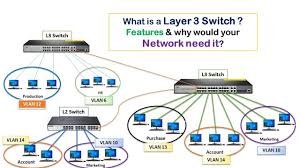
A Layer 3 (L3) switch is a high-performance networking device that combines the functions of a switch and a router, operating at both the Data Link (Layer 2) and Network (Layer 3) layers of the OSI model. Unlike traditional routers, L3 switches use specialized hardware (ASICs) to route data packets between subnets or VLANs at speeds similar to Layer 2 switching, making them ideal for high-speed LAN environments.
Key Features and Functions
- Inter-VLAN Routing: They can route traffic between different VLANs without needing a separate router.
- Packet Inspection: They inspect packet IP addresses for routing decisions.
- Protocol Support: They support routing protocols like RIP, OSPF, and EIGRP.
- Performance: Offer higher throughput and lower latency than traditional software-based routers within a LAN.
- Security & Management: Include features like Access Control Lists (ACLs) and Quality of Service (QoS).
Layer 2 vs. Layer 3 Switch
- Layer 2 Switch: Operates only at the Data Link layer, using MAC addresses to forward data within a single subnet or broadcast domain.
- Layer 3 Switch: Operates at both Layers 2 and 3, using IP addresses to connect different subnets.
Limitations
While powerful, Layer 3 switches generally lack WAN ports and advanced WAN capabilities, meaning they are best suited for internal network segmentation and aggregation rather than acting as an internet edge router.