What is static routing in networking?
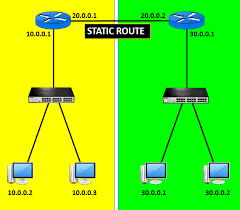
Static routing in computer networks is a manual configuration method where network administrators explicitly define the paths for data packets in a router’s routing table.
It is a non-adaptive technique ideal for small, stable networks, offering high security, predictability, and low resource overhead because it does not require frequent routing table updates.
Key aspects of static routing include:
- Manual Configuration: Administrators must manually update routes when network topology changes, making it unsuitable for large or rapidly changing environments.
- Advantages:
- Resource Efficiency: No CPU overhead for calculating routes, and no bandwidth wasted on routing protocol updates.
- Security: Increased security due to fixed, controlled paths.
- Predictability: The path taken by packets is consistent and predictable.
- Limitations:
- Scalability: Time-consuming to configure and maintain in large networks.
- No Fault Tolerance: If a link fails, traffic is not automatically rerouted.
- Common Use Cases:
- Stub Networks: Small networks with only one path to the outside world.
- Default Route: Used to specify an exit point for traffic when no specific route exists in the table.
- Backup Routing: Providing a manual backup for dynamic protocols.
Components of a Static Route:
A static route configuration requires the destination network, the subnet mask, and the next-hop address (or exit interface).
Example: ip route <destination_network> <subnet_mask> <next_hop>.